Synthetic versus natural antioxidants: stability performance data
Synthetic antioxidants still set the cost-performance benchmark in many lipid systems. BHA, BHT and TBHQ can be effective at legally permitted concentrations as low as 0.02%, or 200 ppm, on a lipid basis.
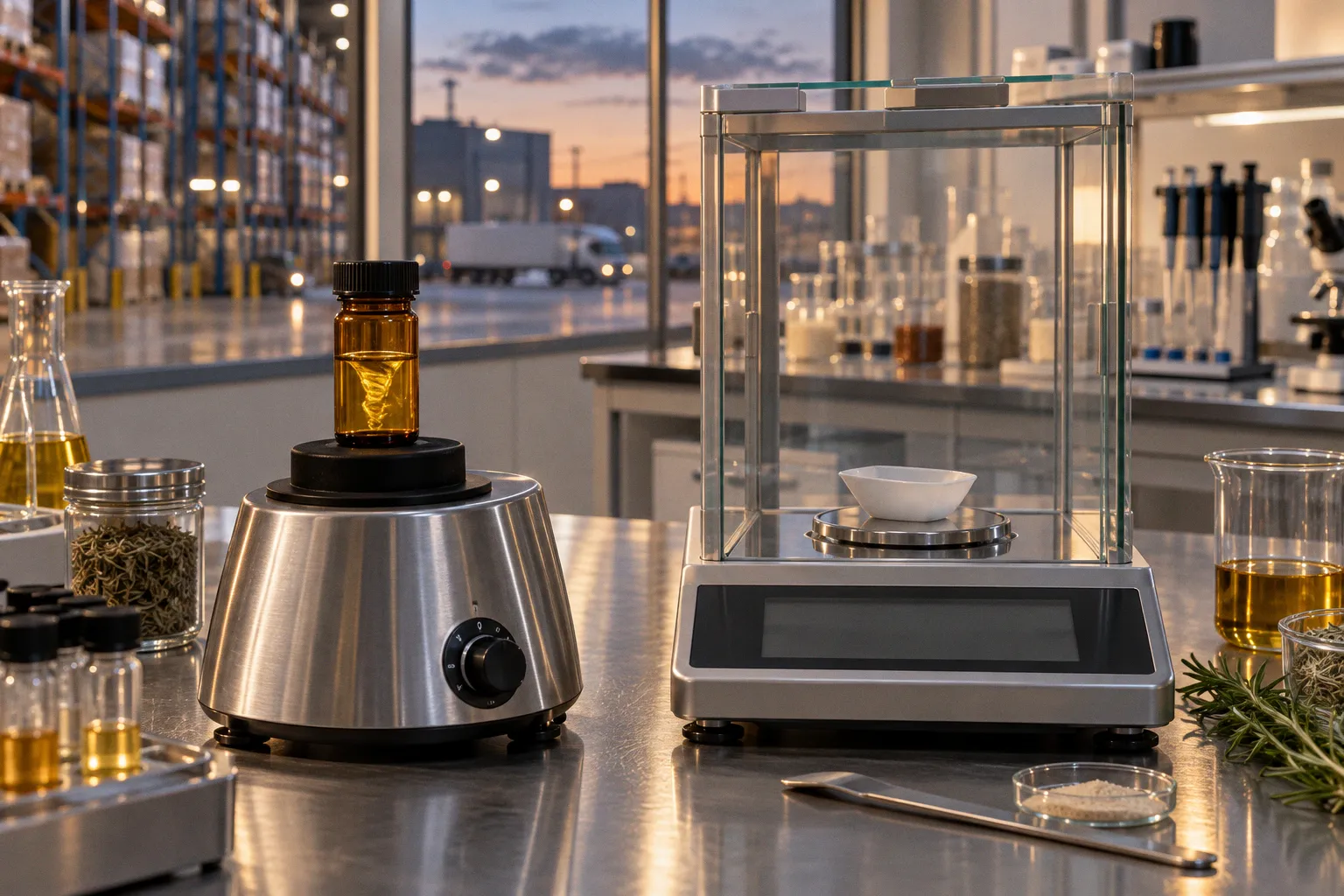
That creates a difficult procurement comparison for natural alternatives: a clean-label claim may earn a formulation access to premium shelf space, but it does not erase the cost of achieving comparable oxidation control.
The gap is not absolute. Rosemary extract can retain structural stability at processing temperatures between 190 °C and 240 °C, and its performance depends on composition as well as dosage. For R&D and sourcing teams, the useful comparison is therefore formulation-specific: potency, heat exposure, ingredient specification and the rules in each target market. A blanket claim that natural antioxidants are either weaker or equivalent is poor purchasing data.
Synthetic antioxidants set a low-dose benchmark
BHA, BHT and TBHQ are engineered for lipophilic systems, where they can act in fats and oils at low inclusion rates. The cited typical maximum legal addition level is 0.02% on a lipid basis. That number matters commercially because a small addition can support oxidation control without materially changing the ingredient bill or displacing much of the base formulation.
The three compounds should not be treated as interchangeable in every matrix. Their relative performance depends on the fat, processing conditions and test endpoint. In one lard oxidative-stability comparison, TBHQ at 0.2 g/kg was the most effective of the agents tested at suppressing increases in peroxide values, outperforming propyl gallate, BHT and Vitamin E. That result gives buyers a useful benchmark for that system, not a universal ranking across foods.
Peroxide value tracks primary oxidation products. It is informative, but it does not by itself establish a fixed shelf-life extension for a finished product. A fryer oil, a dry snack and a complex emulsion expose antioxidants to different conditions. Procurement models that convert one laboratory endpoint directly into a shelf-life claim risk overstating the return.
Low inclusion rates give synthetic antioxidants a structural cost advantage. The commercial question is whether a natural system can justify its higher formulation cost in the specific product and market.
For purchasing teams, the comparison should start with dose and performance in the actual lipid phase. A lower price per kilogram for an antioxidant does not guarantee a lower cost per tonne of finished product if its effective inclusion rate differs. Conversely, paying a premium for a botanical extract makes little sense if the product’s positioning cannot capture that premium downstream.
Rosemary extract changes the thermal comparison
Heat is where simple natural-versus-synthetic labels become less useful. Rosemary extract rich in carnosic acid has demonstrated thermal stability in the range of 190 °C to 240 °C. That places it in contention for some high-heat applications, including lipid systems exposed to demanding processing temperatures.
The temperature range is not a guarantee of equivalent performance in every food. Thermal stability describes the extract’s resistance to decomposition under specified conditions; it does not establish identical oxidation control across all matrices or prove a specific shelf-life extension. Those claims require product-level testing.
This distinction affects capital and operating decisions. A supplier qualification based only on the extract’s botanical origin or a headline temperature threshold leaves key variables unresolved: the extract’s composition, the food’s lipid profile, the processing cycle, and the method used to measure oxidation. R&D needs to test the candidate ingredient in the formulation that will actually be manufactured. Procurement needs specifications that preserve the tested composition across commercial batches.
Rosemary’s thermal resilience creates a credible option for formulators seeking a botanical antioxidant in high-heat lipid applications. It does not make every botanical extract a substitute. The evidence for rosemary cannot be transferred automatically to green tea or other plant-derived materials, whose thermal limits may differ.
Composition drives botanical performance
Rosemary extract is a mixture, and the balance of its active constituents can affect antioxidant activity. Research in the supplied evidence identifies an optimal carnosic acid to carnosol ratio of 2.5 to 3.0 for enhanced activity when the two compounds are combined. For buyers, that shifts the specification discussion beyond a generic “rosemary extract” declaration.
A procurement specification should make composition measurable. If a formulation was validated using an extract with a particular balance of carnosic acid and carnosol, broadening the incoming-material range may change performance. Supplier substitution, crop variation and extraction choices can all matter commercially when the active profile is part of the functional basis for the product.
That creates a familiar ingredient-market trade-off. A tighter specification can protect formulation consistency, but it may narrow the supplier pool and raise the barrier to entry for alternative sources. A looser specification can improve sourcing flexibility while increasing the burden on incoming quality control and finished-product validation.
The sensible test program compares the commercial extract at its intended use level against the incumbent antioxidant. It should reflect the product’s real thermal history and storage conditions, with oxidation endpoints selected for the application. The result should guide a cost-in-use calculation, rather than relying on price per kilogram or a supplier’s general efficacy claim.
Tocopherols are not one performance category
“Tocopherol” can refer to different homologues with different functional profiles. Delta and gamma tocopherols show higher antioxidant capability in stabilizing fats and oils than alpha-tocopherol. Alpha-tocopherol is principally associated with Vitamin E potency in vivo, which makes it a weak stand-in for the performance of other homologues in an industrial lipid system.
This matters in comparisons that place “Vitamin E” in a single column against BHA or TBHQ. The label can obscure the homologue distribution and the intended function. A formulation team assessing tocopherols for oxidation control should request compositional detail and test the specific blend, rather than assuming that alpha-tocopherol’s nutritional role predicts its performance in fats and oils.
The distinction also affects commercial positioning. A tocopherol blend may support both technical and labeling objectives, but those benefits should be priced separately in the business case. If the antioxidant function is the purchasing driver, the relevant comparison is lipid stabilization at the use level and under the target process. If the product also captures value from a Vitamin E claim, that is a separate revenue assumption, not proof of oxidation performance.
Inclusion limits shape the global cost equation
Regulatory limits can reshape the cost comparison across markets. In China, rosemary extract is approved as a food-additive antioxidant under standard GB 1886.172-2016, with a maximum permitted addition of 700 mg/kg in vegetable oils. That ceiling is a jurisdiction- and application-specific reference. It should not be read as a global limit or applied automatically to other food categories.
Synthetic antioxidants and botanical extracts can face different permitted levels and conditions of use. A formulation intended for several markets therefore needs a regulatory review alongside its technical validation. The allowed dose may constrain the performance range, while local labeling rules can alter the commercial value of a natural-source claim.
| Comparison point | BHA, BHT and TBHQ | Rosemary extract |
|---|---|---|
| Typical reference level in the supplied evidence | Up to 0.02% (200 ppm) on a lipid basis | China permits up to 700 mg/kg in vegetable oils |
| Heat-related evidence | No comparable temperature range specified in the supplied evidence | Structural stability reported at 190–240 °C |
| Composition detail | Individual antioxidant selection matters | Carnosic acid and carnosol balance can affect activity |
| Commercial pressure | Low-dose potency supports cost efficiency | Potential premiumization depends on market and formulation |
| Evidence boundary | TBHQ performed best in a specific lard comparison | Performance and shelf-life parity remain matrix-dependent |
The table is a screening tool, not a substitute for regulatory sign-off. Maximum permitted levels depend on the market and food category, and legal ceilings do not necessarily correspond to the dose needed for a particular product. Teams should verify current local requirements before locking a global formula or supplier specification.
Put cost-in-use ahead of label shorthand
A useful antioxidant shelf-life comparison has to connect technical results to margin. That means tracking the ingredient cost at the tested dose, the proportion of batches that meet the oxidation specification, any process constraints and the value the finished product can capture. The evidence available here does not establish universal shelf-life parity ratios across emulsions, dry snacks and bulk oils. Any model claiming one should be treated cautiously unless it is backed by product-specific data.
Clean-label antioxidant performance can support premiumization, but the premium has to survive the arithmetic. If a botanical system costs more and does not unlock a price premium, a distribution advantage or a meaningful formulation benefit, the added spend compresses margin. If it opens a channel or supports a differentiated product that customers will pay for, the higher cost may be rational.
The same discipline applies to synthetic options. Low inclusion rates and strong performance can protect formulation economics, but they may constrain positioning in markets where buyers demand a recognizable botanical ingredient. That is a market-access decision as much as a technical one. Teams should compare the incremental ingredient cost with the revenue or share opportunity, rather than treating consumer-facing language as a substitute for a commercial case.
The current evidence points to a segmented market, not a clean sweep by either category. Synthetic antioxidants retain a strong cost and low-dose position. Rosemary extract has a credible thermal-stability profile and a composition-sensitive performance case. Tocopherols require homologue-level evaluation. As clean-label demand matures, suppliers with consistent specifications and validated application data are likely to capture the defensible share; undifferentiated botanical supply will face saturation, price pressure and consolidation.