Cold chain logistics costs: data on temperature-controlled storage
A pallet of heat-sensitive vitamin premix entering a U.S. third-party cold storage facility can land on a cost ladder that starts at roughly $22 per month and climbs past $60, depending on the temperature zone.
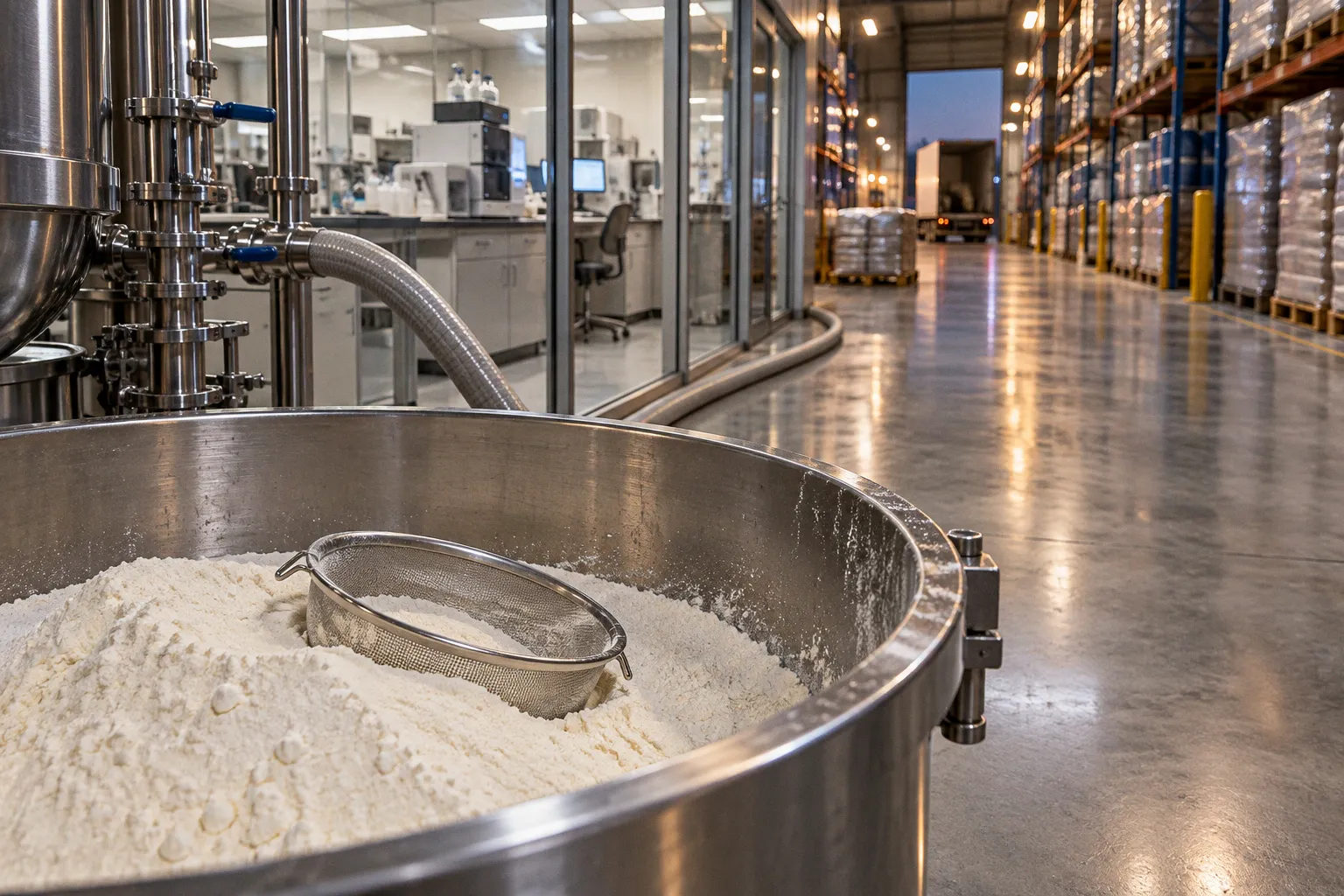
For 500 pallets, the difference between climate-controlled storage at $22 and frozen storage at $62 is $20,000 per month. A comparison between the upper end of the climate-controlled range and the lower end of the frozen range produces a smaller, still material gap: $8,500 per month. For a B2B ingredient business, the margin exposure sits in tier selection, energy pass-throughs, and the surcharge architecture buried in master service agreements.
Refrigerated storage accounted for 51.8% of global cold chain revenue in 2025, and the segment continues to grow faster than ambient warehousing. The asset base is capital-intensive, and qualified capacity is not interchangeable with ordinary pallet space. That is the starting point for any cold chain logistics costs for food ingredients analysis: the operator’s infrastructure and operating constraints shape the rate, while the buyer’s product specifications determine which parts of the service are necessary.
The Economics of Temperature-Controlled Storage: Tiered Pallet Pricing
The 2026 third-party logistics benchmarks point to three broad monthly storage tiers. They are useful as a first comparison, not as a quote. Actual rates vary with location, contract terms, volume, and the services included.
| Temperature zone | Monthly pallet storage (2026) | Typical B2B ingredient fit |
|---|---|---|
| Climate-controlled (15–25°C) | $22–$28 | Heat-sensitive vitamin premixes, some botanical extracts, finished powder blends with moisture-control requirements |
| Refrigerated (2–8°C) | $30–$42 | Probiotics and live cultures, certain enzyme preparations, peptide stocks, some amino acid solutions |
| Frozen (–18°C) | $45–$62 | Long-shelf-life bioactive reserves and other ingredients whose stability data calls for frozen storage |
For 500 pallets, those ranges imply a monthly bill of $11,000–$14,000 for climate-controlled storage, $15,000–$21,000 for refrigerated storage, and $22,500–$31,000 for frozen storage. Comparing climate-controlled storage at $28 with frozen storage at $45 gives an $8,500 monthly difference across 500 pallets. Comparing the lowest climate-controlled rate with the highest frozen rate gives a $20,000 difference. These are illustrations of the range, not guaranteed savings: the actual figure depends on contracted rates and validated product requirements.
The threshold question is which temperature zone each product actually needs. A finished retail product’s label condition does not automatically establish the correct condition for every bulk intermediate. Stability data, packaging, intended shelf life, and handling steps all matter. Across a multi-supplier portfolio, different specification formats can make comparisons difficult. If a product is assigned to a colder tier than its evidence supports, the extra cost compounds with pallet count and time in storage. At 500 pallets, even a $3 monthly difference per pallet adds $18,000 over a year.
A storage tier is a sound cost decision only when the product specification supports it. Otherwise, the comparison starts from the wrong assumption.
Temperature zoning also affects receiving and handling, so it should not be treated as a pricing decision alone. Segregating products by required conditions, documenting storage specifications, and maintaining appropriate lot and temperature records help a buyer explain how product controls are being applied. A shared pallet program does not by itself establish a compliance violation, just as separate programs do not guarantee compliance. The relevant question is whether the facility’s practices and records support the buyer’s applicable food-safety and quality requirements.
For importers subject to the Foreign Supplier Verification Program (FSVP), the buyer’s supplier-verification responsibilities do not disappear when inventory enters a third-party warehouse. The warehouse’s controls may form part of the supply-chain picture, but the applicable requirements depend on the product, the parties’ roles, and the specific activity. A pallet arrangement should be evaluated on those facts, not treated as an automatic trigger for an audit finding.
Energy Consumption as a Primary Operational Cost Driver
Energy accounts for 15% to 18% of revenue for cold storage operators, while refrigeration equipment consumes 70% to 80% of a facility’s electricity. For buyers, those figures help explain why a pallet rate may not tell the whole story. A 2–8°C room depends on refrigeration equipment, monitoring, and maintenance that a dry warehouse does not need to the same extent.
Operators exposed to volatile electricity prices may pass energy costs through as a separate surcharge, a periodic true-up, or an adjustment to the base rate. Contract language determines how visible and predictable that exposure is. A fixed pallet rate with an open-ended energy clause may offer less cost certainty than a slightly higher rate with a defined adjustment formula.
When comparing temperature controlled warehousing expenses, buyers can ask for the basis of any energy charge and how it changes over time:
- Is energy billed as a separate line item or included in the storage rate?
- What index, utility charge, or calculation supports a pass-through?
- How often can the charge be updated, and does the contract set limits or require notice?
- Does the operator distinguish electricity-related charges from fuel or other surcharges?
A facility’s energy use per pallet-month can also be a useful comparison, provided the figure is calculated consistently. Occupancy, building design, product turnover, and the mix of temperature zones can all affect it, so the metric should not be read as a standalone measure of operator quality. A large variance from another facility may justify questions about equipment, utilization, or the calculation method. It does not, on its own, establish product risk or poor performance.
Capital Intensity and the Structural Rigidity of Cold Storage
Building cold storage infrastructure costs $2,600 to $3,700 per square meter in current construction benchmarks, making it two to three times more expensive than a conventional dry warehouse of equivalent footprint. That capital burden helps explain why cold storage capacity is less flexible than ambient space and why the price of a refrigerated pallet rarely tracks the cost of an ordinary warehouse slot.
The investment sits in the building envelope, refrigeration systems, controls, backup arrangements, and ongoing maintenance. A buyer may also need to qualify a site for its own quality system or product requirements. Once a facility is approved for a particular operation, switching providers can involve more than moving pallets. Specifications, processes, records, and responsibilities need review at the new site.
This makes redundancy more complicated, but no less important. A single storage location can concentrate inventory and continuity risk. If a site is unavailable because of a power disruption, equipment failure, labor problem, or other interruption, the buyer may have limited options for transferring temperature-sensitive stock. A second qualified site can provide resilience, though it may add storage charges, transfer costs, and qualification work.
The right choice depends on the ingredient’s value, shelf life, availability, and the consequences of a supply interruption. For a critical live culture, backup capacity may justify a higher cost. For a lower-risk ingredient with a long shelf life and alternative supply, the same expense may be difficult to defend. Model the redundancy premium against a credible disruption scenario rather than treating duplicate capacity as a universal requirement.
Capital intensity also changes how buyers should approach contract length and exit terms. Longer commitments can help an operator plan capacity, but they can leave a buyer exposed if its inventory profile changes. The contract should make clear how rates, minimum volumes, energy charges, and termination rights work together. The headline pallet price is only one part of the commercial commitment.
Refrigerated Freight Benchmarks: Spot vs. Contract Rate Volatility
The freight side is where short-term budget variance can become most visible. In June 2025, refrigerated truck spot rates averaged $2.35 per mile, while contract rates averaged $2.71 per mile. In that period, the contracted rate was higher. This is a snapshot, not a standing rule for every lane or season, and it should not be applied without checking how each rate was calculated.
For a B2B ingredient buyer, paying more for committed capacity can be a deliberate trade. A contract may improve access to a carrier during periods of tight capacity, such as a heat wave or seasonal surge. Spot purchasing can be attractive when capacity is available and timing is flexible, but its price and availability may be less predictable. The decision turns on the value of service certainty for a particular lane, not a universal preference for contract or spot.
Temperature sensitivity, shelf life, shipment frequency, and the consequences of a missed pickup all shape the decision. A long-shelf-life frozen product may allow more scheduling flexibility than a live culture with a narrow handling window. Even then, the buyer should assess the full lane: pickup timing, transit duration, equipment requirements, temperature monitoring, and what happens when a shipment is delayed or rejected.
A practical freight review keeps the analysis at lane level. Compare actual contract terms with recent spot quotes for the same route and service requirements. Include accessorial charges and any requirements for a specific trailer or handling process. Then assess service performance alongside price. A lower rate is a poor bargain if it repeatedly fails to protect the product or meet the agreed delivery window.
Refrigerated transport efficiency metrics are most useful when they connect cost to service. On-time performance, temperature records, rejected loads, claims, and dwell time can show whether a rate buys the reliability the ingredient requires. Define these measures consistently with the carrier and review them over time. One month of freight prices alone will not reveal how well a lane performs.
Hidden Surcharges: The Financial Impact of Value-Added Cold Chain Services
The pallet rate is only one part of the invoice. Receiving, special handling, temperature recovery, staging, and other services can be billed separately. These charges may be legitimate and necessary, but unclear triggers make them hard to forecast and harder to reconcile.
The 2026 benchmarks cited for common charges include:
- Blast freezing: about $38 per pallet. The charge may apply when inbound product arrives warmer than the facility’s receiving limit or requires a rapid temperature pull-down before storage.
- Inspection staging: about $95 per lot in the cited benchmark. Whether it applies, and what it covers, depends on the product, inspection process, and warehouse agreement.
- Cold receiving: approximately $9 per pallet as a baseline, often itemized separately from storage.
Those figures are not universal tariffs. Before signing, a buyer should establish what event triggers each charge, how the operator measures it, and whether routine receiving time is included. The agreement should distinguish a service requested by the buyer from one performed because a shipment arrived outside its agreed condition.
Inspection-related charges require particular care because regulatory jurisdiction depends on the product and activity. Many foods and food ingredients fall under FDA oversight. Certain meat, poultry, and egg products are subject to USDA Food Safety and Inspection Service (FSIS) oversight. Botanical extracts and dairy-derived proteins are not automatically FSIS-regulated merely because they are imported or held in a refrigerated facility. The applicable agency and inspection requirements depend on the specific product and circumstances.
A buyer running frequent inspected shipments may accumulate meaningful staging costs, but the annual total depends on lot frequency, staging terms, and whether the charge applies on each occasion. The $95-per-lot benchmark alone does not support an estimate of six-figure annual expense. Build a forecast from actual lot frequency and contracted fees, then review invoices against that basis.
A rate sheet sets expectations; the invoice shows how the service was billed. Clear contract language matters most where the two meet.
Recordkeeping should follow applicable requirements and the parties’ agreed procedures. A staging event may belong in a shipment or inventory record, but FDA and USDA systems do not share one universal checklist of fields for every product and situation. Buyers should avoid treating an inspector’s identity, a resolution timestamp, or any other specific field as a blanket requirement without checking the rules that apply to the product and activity. In practice, the warehouse agreement can still specify the operational records the buyer needs, such as lot references, dates, condition on receipt, and details of any hold or release.
Putting cold chain supply chain data to work
The purpose of food ingredient storage cost analysis is to connect the invoice to product need, operational performance, and contract terms. A low pallet rate can mislead if the product is assigned to the wrong zone, energy charges are uncapped, or receiving services are billed separately. A higher rate may be justified when it buys the level of temperature control or continuity the ingredient requires.
A useful review starts with each ingredient’s validated storage condition and actual inventory pattern. Then compare the relevant cost components: monthly storage, receiving, energy adjustments, transfers, inspection staging where applicable, and freight. Keeping those components separate makes it easier to see whether an increase comes from more inventory, a changed temperature tier, a new surcharge, or a rate revision.
Procurement and quality teams have different responsibilities, but they need compatible information. Procurement needs to understand what the contract permits the operator to bill. Quality needs records and processes that support the product’s handling requirements and the company’s applicable controls. Neither team can infer the whole picture from the pallet rate.
The 2026 cost environment rewards attention to tier selection, energy terms, freight service, and surcharge triggers. The useful goal is to pay for the storage and transport the product needs, understand what may change the invoice, and keep enough documentation to explain the arrangement when it is reviewed.