GRAS status notification factors for novel botanical ingredients
The FDA’s proposed rule published on August 11, 2026, would change how manufacturers document GRAS conclusions for food ingredients: notifications, which have been voluntary, would become mandatory.
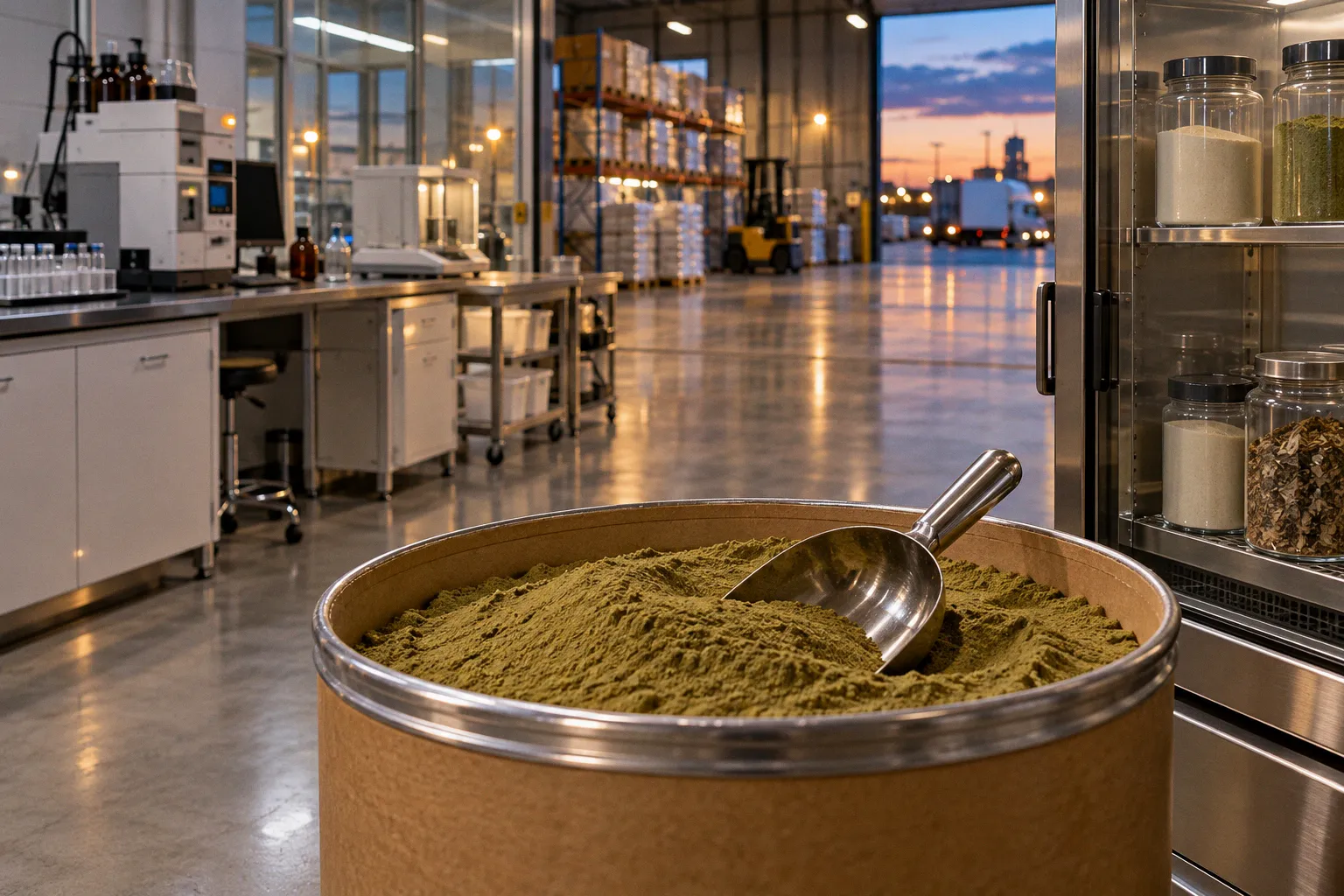
For companies marketing novel botanical ingredients in the United States, that shift puts the safety record and its supporting evidence closer to the centre of regulatory and supply-chain planning.
The proposal is not yet a final rule. Its effective date and some details may change after public comment. But manufacturers should not treat that uncertainty as a reason to defer work: if a botanical’s U.S. market position relies on a self-affirmed GRAS conclusion, the company may need to prepare a submission within a proposed one-year window for existing products.
The regulatory shift: from voluntary GRAS to mandatory submission
Under the Federal Food, Drug, and Cosmetic Act, a substance added to food is generally a food additive unless it qualifies for GRAS status or another statutory exemption. A GRAS conclusion therefore carries a specific compliance burden. The ingredient’s intended conditions of use must be supported by evidence that makes the substance generally recognized as safe among qualified experts.
Under the 2016 GRAS Final Rule, manufacturers could submit a GRAS notice to the FDA, but notification was voluntary. A company could instead reach and document its own GRAS conclusion without notifying the agency. That approach is commonly called self-affirmation. It does not mean the FDA has reviewed or approved the ingredient.
The FDA’s August 2026 proposal would amend 21 CFR Part 170 and Part 570, making notifications mandatory rather than voluntary. Part 170 covers the GRAS notification procedures for human food; Part 570 addresses GRAS regulations for animal food. The proposed pathway includes a time-limited, streamlined option for products already in interstate commerce under self-affirmation, with a one-year submission window.
The operational question is therefore conditional. If the rule is finalized substantially as proposed, a manufacturer relying on an existing self-affirmed conclusion would need to assess whether its product qualifies for the transition pathway and prepare the required notice within the applicable period. If the final rule changes the window or eligibility conditions, the compliance plan will need to follow those final terms. Until then, the proposed rule is a planning signal, not a settled filing deadline.
For manufacturers, this touches more than regulatory affairs. A notification can require evidence held across formulation, quality, toxicology, sourcing, and commercial teams. Gaps in supplier records or unclear specifications can slow dossier preparation and complicate traceability. The exposure is greatest where the safety conclusion depends on a botanical extract whose composition varies with plant part, origin, harvest, or processing.
A self-affirmed GRAS conclusion is a company’s safety position. It is not an FDA response letter.
Scientific consensus and toxicological data for botanicals
Novel botanical ingredients present a particular evidence problem: a familiar plant name does not establish the safety of every extract, preparation, dose, or food use derived from it. The GRAS question concerns a defined substance under defined conditions of use. A safety case for one plant part or extraction process cannot automatically be carried over to another.
The standard rests on scientific consensus supported by publicly available safety data and robust scientific procedures. For a novel botanical, this typically means the company must assemble an evidence base that addresses the ingredient’s identity and composition, likely dietary exposure, and toxicological profile. The depth of each component depends on the substance and proposed use; there is no single toxicological threshold that can be applied across all botanicals.
A defensible dossier should make the connection between product specification and the evidence clear. If the toxicology data concern a preparation with a particular solvent, marker profile, or concentration, the commercial ingredient should be shown to match it. If manufacturing changes alter the extract’s composition, the safety rationale may need to be revisited. That is where traceability becomes a safety issue rather than a paperwork exercise: the company needs to establish which material the evidence covers and whether supplied batches remain within that identity.
Dietary exposure modeling also needs to match the intended market use. A botanical used at a low level in one food category may present a different exposure picture if it is later added to multiple products or consumed by a wider population. The assessment should account for the proposed conditions of use and expected intake, rather than relying on a generic statement that the ingredient has a history of use.
A practical evidence review should look for:
- Identity and specification: the botanical species, plant part, extraction method, key compositional characteristics, and limits that distinguish the ingredient evaluated from other preparations.
- Exposure assumptions: the foods in which the ingredient will be used, proposed use levels, and the dietary exposure estimate that follows from those conditions.
- Toxicological assessment: relevant studies and the scientific rationale for addressing any remaining uncertainties, including whether the tested material is comparable to the commercial ingredient.
- Manufacturing and supplier records: controls that connect incoming raw material, processing, finished ingredient, and the safety evidence in the dossier.
- Publicly available support: information that can substantiate general recognition among qualified experts, rather than a conclusion resting only on non-public company data.
The proposed rule does not establish a universal set of toxicological limits for novel botanical extracts. Those limits cannot be inferred from the general GRAS framework alone. Companies should avoid treating a data package for one botanical as a template that resolves the safety questions for another.
The FDA response framework: what the letters mean
A GRAS notification is not a premarket approval application. Under the 2016 Final Rule, the FDA issues one of three formal response letters: “no questions,” “insufficient basis,” or “cease to evaluate.” Their meaning matters for regulatory positioning and for the claims a company makes to customers.
A “no questions” letter indicates that, based on the notice submitted, the agency has no questions at that time about the notifier’s GRAS conclusion. It does not turn the notice into FDA approval. The company remains responsible for the ingredient’s safety, the accuracy of its submission, and compliance with the conditions of use described in the notice.
An “insufficient basis” letter signals that the agency does not consider the submitted information sufficient to support the GRAS conclusion. That response can expose weaknesses in the evidence, assumptions, or explanation of the ingredient’s use. The manufacturer then has to decide how to address those gaps before relying on the conclusion in its compliance position.
A “cease to evaluate” letter means the FDA has stopped evaluating the notice, rather than issuing a substantive conclusion that the ingredient is safe. It should not be presented as an affirmative agency finding.
These distinctions matter in commercial documents as well as regulatory files. A supplier’s claim that an ingredient is “FDA approved” on the basis of a GRAS notice overstates what the response process establishes. Buyers should ask what conclusion the company relies on, whether a notice was submitted, what response the FDA issued, and whether the supplied material and intended use align with the submission.
Existing self-affirmed ingredients: preparing for the transition
The proposed rule includes a streamlined submission pathway with a one-year window for existing products already in interstate commerce under self-affirmation. The proposal’s final details remain uncertain, including its eventual effective date and whether the transition provisions will change. Companies should avoid assuming that every self-affirmed ingredient will qualify or that the proposed period will begin on a date they can already calculate.
The first task is to identify which ingredients depend on self-affirmation and map each conclusion to the product actually sold. A company may have more than one botanical preparation under a shared commercial name, or a supplier may have changed the manufacturing process since the safety assessment was prepared. Those differences can become material when the company assembles a notification.
A transition review can proceed in stages:
1. Inventory the GRAS basis. Record whether each ingredient relies on a submitted notice, a self-affirmed conclusion, another statutory exemption, or a different regulatory basis. Keep human-food and animal-food uses distinct where relevant.
2. Match the conclusion to current use. Compare the documented identity, specifications, use levels, and food categories with current formulations and customer applications.
3. Locate evidence and ownership. Establish which party controls the toxicology reports, exposure modeling, manufacturing records, and supplier data needed to support a submission. Contractual access can be a bottleneck if the dossier depends on third-party information.
4. Document changes and gaps. Flag changes in sourcing, plant part, extraction, composition, or intended use that may weaken the connection between the existing safety assessment and the ingredient now being sold.
5. Track rulemaking before fixing a filing schedule. Monitor the proposed rule’s status and transition terms, then set internal milestones against the final requirements rather than treating the proposal as already effective.
This work is also a continuity issue. If a customer depends on an ingredient whose compliance position is unclear, a late discovery can affect qualification, purchasing, or reformulation decisions. A manufacturer may need to coordinate with suppliers early to secure specifications and data, particularly where the supplier considers those materials confidential or has not previously supported a U.S. GRAS submission.
Timelines: GRAS notification and food additive petitions
The typical timeframe for a GRAS notification process is 6 to 18 months. A traditional Food Additive Petition can take 2 to 5 years. These are planning ranges, not guaranteed review periods, and the time required to build a complete safety record may come before any formal agency process begins.
| Route | Typical timeframe | Compliance distinction |
|---|---|---|
| GRAS notification | 6 to 18 months | Supports a GRAS conclusion for specified conditions of use; the FDA response is not premarket approval. |
| Food Additive Petition | 2 to 5 years | Seeks authorization for a food additive through a separate statutory route. |
The route depends on the legal basis for use, the available evidence, and whether the ingredient can meet the GRAS standard. A shorter typical timeframe does not make a GRAS notice a shortcut around the evidence requirement. For novel botanicals, the work may be concentrated in defining the ingredient, establishing relevant exposure, and demonstrating that the available data support a generally recognized safety conclusion.
For procurement and product planning, the key distinction is between the filing timeline and the readiness timeline. A company may need months to reconcile supplier specifications, obtain toxicological data, and confirm that intended use levels match the safety assessment before a notice is ready to submit. If those steps begin only after a regulatory deadline becomes firm, the agency timeline is unlikely to be the only constraint.
The August 2026 proposal has not yet established a final effective date or settled transition terms. Manufacturers should therefore take immediate, limited steps: identify self-affirmed botanical ingredients in U.S. commerce, secure access to the evidence behind each conclusion, and compare that evidence with current products and supplier specifications. Then assign an owner to monitor the rulemaking and update the submission plan when the final requirements are known.